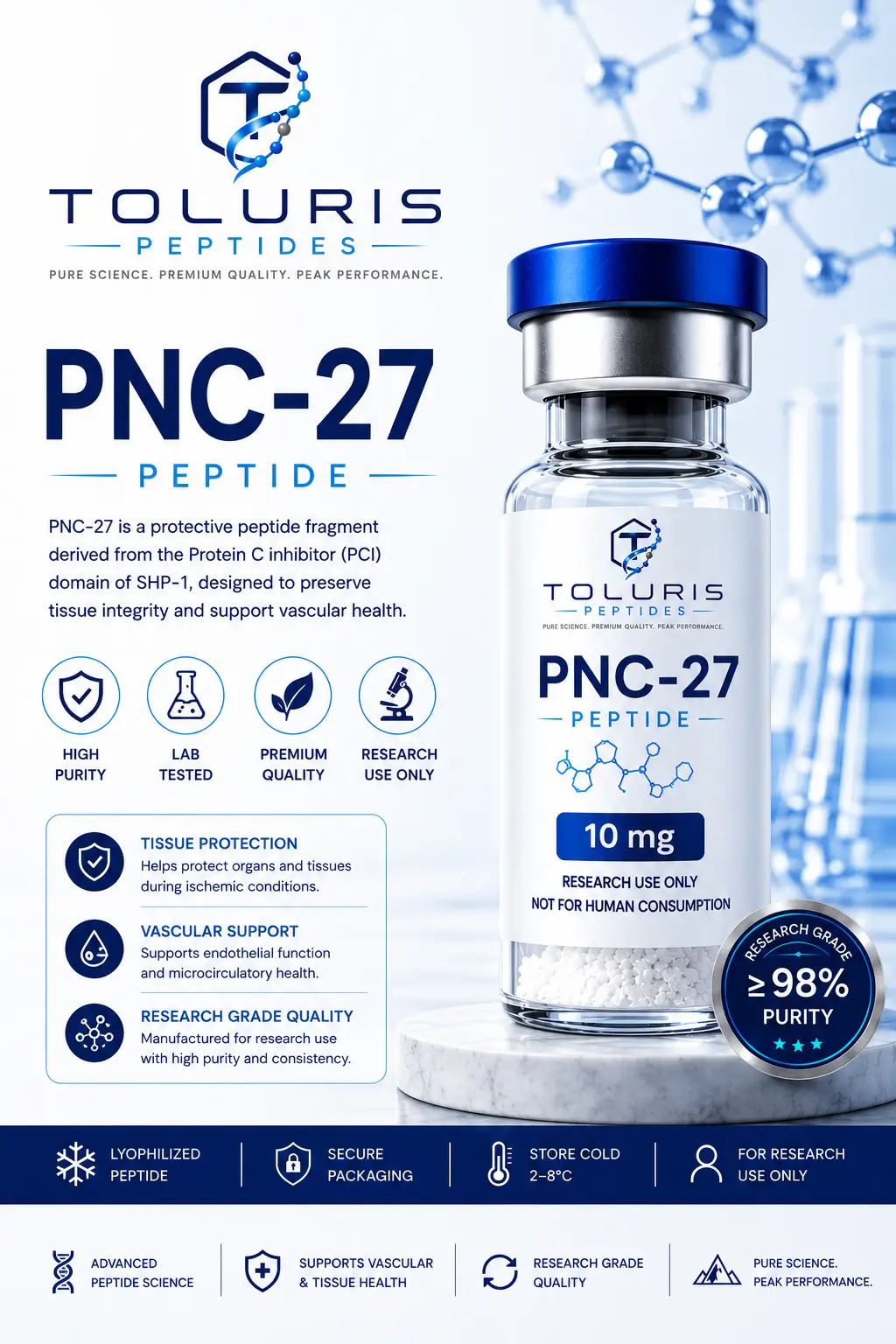
PNC-27
Also known as: PNC-27, p53-HDM2 Disruptor Peptide, Anti-Cancer Peptide PNC-27
PNC-27 is an experimental synthetic peptide designed for cancer treatment, created by combining a segment derived from the p53 protein’s HDM-2 (MDM2) binding region with a sequence that enables cell membrane penetration. It is being investigated for its ability to specifically target cancer cells expressing HDM-2 on their surface, leading to the rapid formation of pores in the cell membrane and subsequent destruction of tumor cells—while leaving healthy cells unharmed, based on preclinical findings. Rather than inducing apoptosis like many traditional cancer therapies, it is studied primarily for its capacity to cause direct membranolysis and necrotic cell death in cancer cells.
Ongoing research involving PNC-27 typically focuses on:
– Experimental cancer treatments and targeted tumor therapies
– Studies of the HDM-2 / p53 signaling pathway
– Preclinical models of pancreatic, breast, colon cancers, melanoma, and leukemia
– Mechanisms of cancer cell destruction through membrane pore formation
– Experimental cancer treatments and targeted tumor therapies
– Studies of the HDM-2 / p53 signaling pathway
– Preclinical models of pancreatic, breast, colon cancers, melanoma, and leukemia
– Mechanisms of cancer cell destruction through membrane pore formation
• Status: Preclinical stage – research includes comprehensive in vitro experiments and studies using ex vivo human cancer tissues. Supporting evidence comes from animal testing.
• Dosage: No established human dose, as this is strictly a research compound with no current application in humans. In animal studies, it has been administered via intravenous injection, but this route is not intended for human use.
• Investigated for: Use in cancer-related research, including tumor targeting and broader oncology studies.
• Dosage: No established human dose, as this is strictly a research compound with no current application in humans. In animal studies, it has been administered via intravenous injection, but this route is not intended for human use.
• Investigated for: Use in cancer-related research, including tumor targeting and broader oncology studies.


Reviews
There are no reviews yet.