
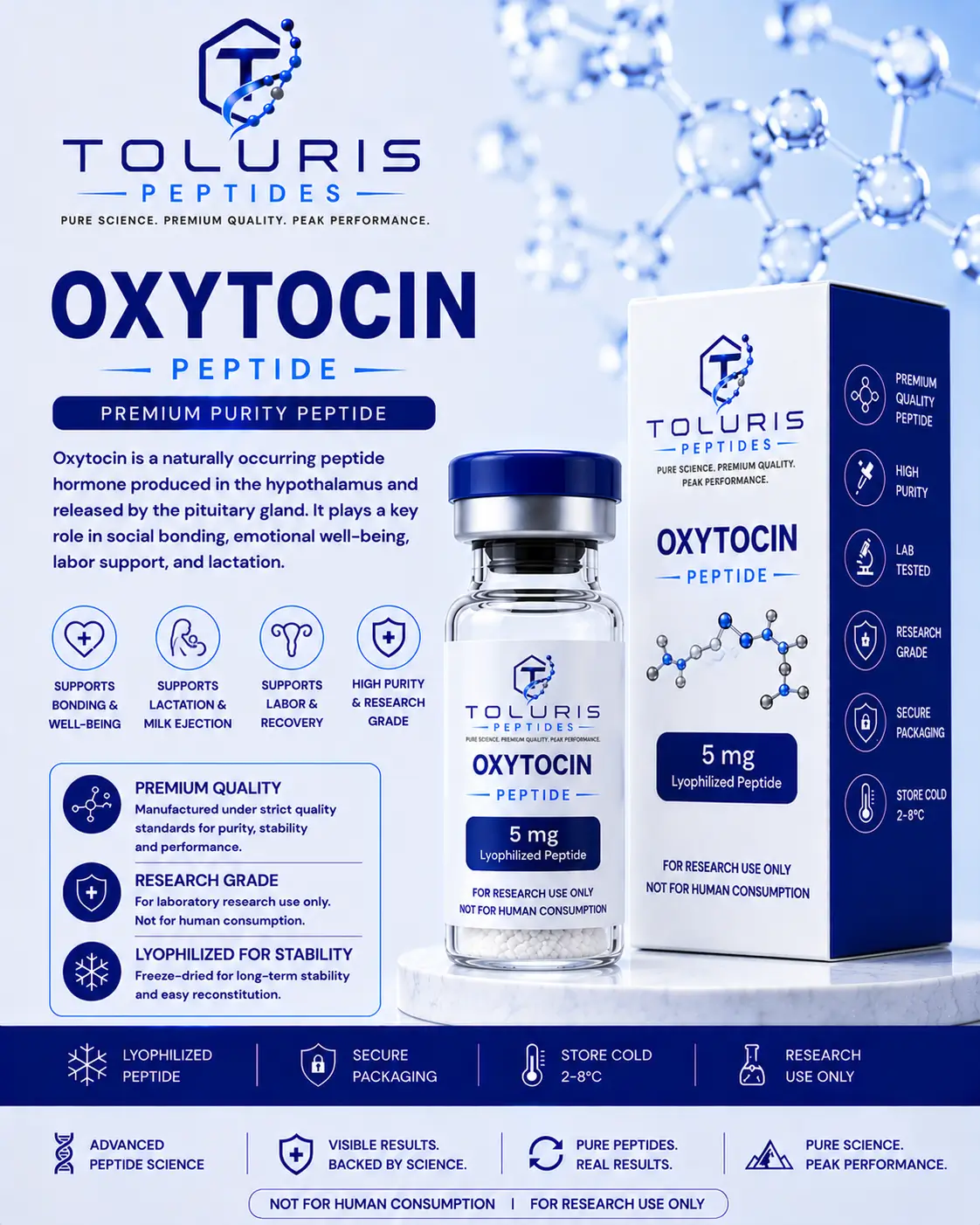
Oxytocin (The Love Hormone)
Also known as: Pitocin, Syntocinon, The Love Hormone
Oxytocin is a naturally produced neuropeptide hormone, frequently nicknamed the “bonding” or “love” hormone. It plays an essential role in fostering social connections, building trust, regulating stress, and supporting processes like childbirth and breastfeeding.
Scientists study oxytocin for its impact on emotional behavior, mood regulation, social cognition, and how people interact with one another. It has also drawn attention in neuroscience and wellness circles due to its possible effects on promoting relaxation, enhancing empathy, and supporting overall emotional health.
Key areas of research include:
– Social attachment and relationship functioning
– Management of stress and anxiety
– Emotional health and mood regulation
– Cognitive and neurobehavioral studies
– Reproductive and maternal well-being
– Social attachment and relationship functioning
– Management of stress and anxiety
– Emotional health and mood regulation
– Cognitive and neurobehavioral studies
– Reproductive and maternal well-being
• Status: Approved by the FDA. Evidence level: FDA-approved.
• Typical dosage: 10–24 IU administered intranasally as required; intravenous use in obstetrics, intranasal in research settings.
• Investigated for: Enhancing social connection, reducing anxiety, promoting trust, and supporting emotional well-being.
• Typical dosage: 10–24 IU administered intranasally as required; intravenous use in obstetrics, intranasal in research settings.
• Investigated for: Enhancing social connection, reducing anxiety, promoting trust, and supporting emotional well-being.
Reviews
There are no reviews yet.